$650K launch package plus $750K first yard.
Decision now: $1.40MVehicle company establishedGovernment path advancedScale case: five yards
Guyana Consolidated Lumber Yards
Fund the first controlled export yard, then scale the network.
The first $1.40M capitalizes the established vehicle company, completes the launch platform, and builds the first CLY. The full $6.65M program expands that operating model to five yards producing $37.9M Year 3 revenue and $13.1M Year 3 EBITDA.
Vehicle capitalization, site support files, producer files, buyer pipeline, custody records, and reporting.
Hardstand, access, fencing, cameras, checkpoint, and site setup.
12,000 m3/year at the modeled $620/m3 sale price.
Five CLYs, launch platform, equipment fleet, and reserve.
Stabilized five-yard operating EBITDA before financing.
1
Investor logic
Investment Logic
This is a staged operating build on an established vehicle company. The first asset demonstrates the intake-to-export loop; the five-yard program scales the same loop into the stabilized financial model.
Variable by lot; buying targets at least 45% below local reseller prices.
One CLY at 1,000 m3/month.
Five yards at stabilized throughput.
Vehicle company established; preliminary government conversations completed under pre-licensing conditions.
Underwriting Sequence
| 1 | Execution gap | Legal producers have logs and need secure aggregation, export buyer access, and consistent shipment documentation. |
| 2 | CLY mechanism | The yard becomes the controlled intake point: stalls, lot identity, custody records, buyer allocation, and export packets. |
| 3 | First operating asset | $1.40M capitalizes the established vehicle company, completes launch controls, and builds the first CLY around volume, custody, buying discipline, and reporting. |
| 4 | Expansion | Replication across five yards turns one operating asset into 60,000 m3/year of stabilized throughput. |
| 5 | Payoff | At the modeled spread, the five-yard network produces $37.9M Year 3 revenue and $13.1M EBITDA. |
Why the business is financeable
Asset-light by design
Capital funds yards, records, security, equipment, and reserves. Inventory is purchased against buyer demand.
First yard before replication
The first tranche builds the working yard and management system that become the five-yard operating template.
Buying discipline is simple
The desk buys at least 45% below local reseller prices, preserves lot identity, and sells into export buyer demand.
Buyer value is operational
The CLY sells reliability: consolidated lots, species sorting, custody files, and one accountable counterparty.
2
First funding decision
First Check: $1.40M
The investor decision is clear: fund the launch package and first yard, create the first operating record, then use that record to complete the five-yard program.
One execution tranche with two uses.
Vehicle capitalization, controls, site package, producer book, buyer book, SOPs.
First secured non-processing yard ready for intake and buyer matching.
First-dollar deployment
The first check separates operating setup from physical yard buildout.
Use of First Tranche
| Launch/documentation platform | $0.65M | Capitalizes the established vehicle company with site support files, producer files, buyer pipeline, SOPs, custody records, insurance pricing, contractor scopes, and monthly investor reporting. |
| First CLY buildout | $0.75M | Builds the first non-processing yard: hardstand, access, drainage, fencing, lighting, cameras, office/checkpoint, safety setup, and launch reserve. |
| First tranche total | $1.40M | Capitalizes the established vehicle company, launches investor reporting, and builds the first CLY. |
Investor receives after Tranche 1
A built operating asset
One CLY with physical yard systems, intake/checkpoint, security, storage layout, and operating staff plan.
A controlled commercial pipeline
Producer files and buyer pipeline organized around species, volume, price floor, and route economics.
Monthly visibility
Capital use, site progress, producer enrollment, buyer development, lot files, throughput, and spread reported every month.
Capital Path
| First tranche | $1.40M | $650K launch/documentation + $750K first CLY. Starts execution with the platform files and first operating yard. |
| Expansion capital | $5.25M | Four additional CLYs, Japan equipment fleet, and operating reserve. Completes the five-yard network and supports ramp to stabilized throughput. |
| Total program | $6.65M | Five-yard deployment program. Funds the full base case that reaches the Year 3 stabilized model. |
3
Funded execution
What the First Tranche Builds
The first tranche funds execution around an established vehicle company, advanced government conversations, and the first yard operating system.
Capital controls
Banking, release rules, use-of-funds tracking, investor reporting cadence.
First site package
Site support, yard map, build scope, contractor pricing, security plan.
Producer book
Applications, source evidence, stall terms, price terms, payment instructions.
Buyer book
Target buyers, LOI pipeline, species requirements, price files, inspection terms.
Custody system
Lot ledger, photo log, chain-of-custody packet, release approval, reconciliation.
Operating playbook
Gate, intake, measurement, storage, equipment-use, safety, and reporting SOPs.
Workstream, Output, Investor Evidence
| Lane | Output | Why It Matters |
|---|---|---|
| Corporate setup | Use the established vehicle company to complete capitalization records, bank controls, use-of-funds controls, and investor reporting cadence. | Starts execution from an existing corporate vehicle instead of a blank setup file. |
| Government and site support | Convert preliminary government conversations and pre-licensing condition work into site support letters, land-use permission, utility support memo, local authority contacts, site maps, and build scopes. | Turns the government path already opened into executable yard locations. |
| GFC and export readiness | Build the operator file, export eligibility file, log export policy file, levy schedule, GFC-facing document set, and shipment packet template. | Creates the export administration package for launch. |
| Producer enrollment | Recruit producers and collect applications, licensing/source evidence, stall agreements, price terms, payment instructions, and producer terms. | Builds the supply base for documented intake. |
| Buyer development | Build the buyer target list, LOI pipeline, sample contracts, species requirements, price files, inspection terms, and FOB/logistics terms. | Creates the contract-backed purchasing pipeline. |
| Yard operations | Write gate SOP, intake SOP, measurement SOP, storage map, security plan, safety plan, and equipment-use policy. | Standardizes the five-yard operating playbook. |
| Inventory and custody | Create lot ledger, chain-of-custody packet, photo log, stock count template, release authorization, and reconciliation report. | Creates the inventory-control system before volume scales. |
| Finance and insurance | Price contractor scopes, equipment lease plan, reserve policy, insurance quotes, and monthly reporting template. | Converts the model into first-tranche execution controls. |
4
First operating asset
First Yard Economics
The first CLY converts the established vehicle and government work into operating traction: volume, custody, buyer demand, buying discipline, and reporting.
First secured CLY buildout.
One yard at 1,000 m3/month.
12,000 m3 x $620/m3.
12,000 m3 x $234/m3 base spread.
Modeled gross spread less $180K fixed site cost.
First-yard revenue bridge
Annual one-yard model from export revenue to site contribution before central desk.
First CLY Annual Model
| Annual throughput | 1,000 m3/month x 12 | 12,000 m3/year |
| Annual export revenue | 12,000 m3/year x $620/m3 | $7.44M |
| Producer purchases | 12,000 m3/year x $341/m3 | $4.09M |
| Port, barge, loading, export handling | 12,000 m3/year x $45/m3 | $0.54M |
| Modeled gross spread before fixed site cost | 12,000 m3/year x $234/m3 | $2.81M |
| Fixed yard operating cost | $15,000/month x 12 | $0.18M |
| Site contribution before central desk | $2.81M modeled gross spread - $0.18M fixed site cost | $2.63M |
Per-m3 economics
The same pricing waterfall drives the first yard and the full network, while purchases remain variable by lot.
First-Yard Operating Standards
| Intake | Enrolled producers deliver documented logs into a controlled yard workflow. | |
| Custody | Each lot keeps identity through storage, buyer allocation, release, and shipment packet. | |
| Buying discipline | Purchases target at least 45% below local reseller prices while buyer demand and route economics support the modeled spread. | |
| Buyer pull | Consolidated lots move through direct export buyer demand instead of fragmented spot channels. | |
| Reporting | Management reports cash use, build progress, producer files, buyer pipeline, throughput, and spread every month. | |
5
Expansion case
Five-Yard Expansion Case
The $6.65M program completes the network: five secured CLYs, equipment support, launch systems, operating reserve, and a stabilized 60,000 m3/year throughput model.
First tranche plus expansion capital.
Five CLYs at $750K each.
Lease-to-own producer support asset.
Launch cadence, site readiness, and operating float.
Program capital allocation
Full five-yard use of proceeds by deployment bucket.
Capital sequence
First check, expansion capital, and total program in one view.
Full-Program Uses
| Yard capex | $3.75M | $750K per location for fencing, concrete, land prep, office/checkpoint, secure yard systems, and contingency. |
| Japan equipment fleet | $1.25M | Initial lease-to-own equipment fleet; kept separate from yard capex. |
| Launch and documentation | $0.65M | Insurance, sourcing, documentation systems, producer onboarding, and export-buyer setup. |
| Operating reserve | $1.00M | Reserve for site readiness, contract settlement timing, launch cadence, and early operating scale. |
| Total program | $6.65M | Replicates the first-yard system across a five-yard export network. |
Rollout Schedule
| Months 0-3 | Use the established vehicle company to complete the first capital controls, convert preliminary government conversations into site support files, and begin buyer outreach and producer enrollment. | |
| Months 4-9 | Build first 2 yards, launch purchasing desk, begin compliant aggregation and export documentation. | |
| Months 10-18 | Open remaining 3 yards, establish security coverage, equipment lease program, and standard grading flow. | |
| Year 3 | Operate at modeled 60,000 m3/year network capacity with stable buyer and producer cadence. | |
| Years 4-5 | Optimize buyer mix, species sorting, contract settlement timing, and producer retention. | |
Per-yard build budget
Target site build cost: $750K per CLY before fleet, launch platform, and reserve.
Per-Yard Capex Detail
| Concrete pads and loading aprons | $220K | Hardstand areas for log storage, loading lanes, and truck movement within the non-processing CLY model. |
| Site prep, grading, drainage, access | $150K | Land clearing, compaction, drainage, gravel/access works, and yard layout preparation. |
| Perimeter fencing, gates, lighting, cameras | $165K | Physical security for stored producer inventory, controlled truck access, perimeter lighting, and yard camera coverage. |
| Office/checkpoint, basic IT, scale allowance | $125K | Small site building, intake/checkpoint, records hardware, basic communications, and weigh/measurement allowance. |
| Safety, fire, signage, yard markings | $30K | Low-cost operating controls needed for a non-processing storage and aggregation site. |
| Permits, project management, setup reserve | $60K | Local setup budget for installation coordination and final site readiness. |
| Target per yard | $750K | Secured storage, aggregation, custody, and export-yard readiness. |
6
Operating model
Financial Model
The financial case is driven by disciplined buying: a modeled $234/m3 gross spread that varies by species and lot, anchored by purchases at least 45% below local reseller prices.
Five-year revenue and EBITDA
Base-case plan view; all figures in USD millions.
Year 3 EBITDA bridge
Stabilized annual model from export revenue to network EBITDA.
Annual Operating Model
| Year | Yard Stage | Throughput | Export Rev. | Ancillary | Optimization | Gross Spread | EBITDA | EBITDA % |
|---|---|---|---|---|---|---|---|---|
| Year 1 | 2 build / partial | 14,000 m3 | $8.68M | $0.23M | $0.00M | $3.28M | $2.20M | 24.7% |
| Year 2 | 5 active / ramp | 40,000 m3 | $24.8M | $0.30M | $0.00M | $9.36M | $8.00M | 31.9% |
| Year 3 | 5 stabilized | 60,000 m3 | $37.2M | $0.75M | $0.00M | $14.0M | $13.1M | 34.6% |
| Year 4 | 5 optimized | 60,000 m3 | $37.2M | $0.85M | $3.95M | $18.0M | $15.9M | 37.9% |
| Year 5 | 5 mature | 60,000 m3 | $37.2M | $0.95M | $8.05M | $22.1M | $18.3M | 39.6% |
Revenue mix
Years 4 and 5 add buyer-mix and sorting lift while base volume remains at modeled capacity.
Model Drivers
| Driver | Formula | Result |
|---|---|---|
| Throughput engine | 5 yards x 1,000 m3/month x 12 months | 60,000 m3/year stabilized network volume. |
| Weighted sale price | Species portfolio blended to $620/m3 | Greenheart, Purpleheart, Mora, Wallaba, Wamara, and Crabwood drive the average export price. |
| Purchase discipline | Weighted purchase basis of $341/m3 | The buying desk targets at least 45% below local reseller prices; actual lot purchases remain variable by species, quality, and buyer demand. |
| Port-side handling | $45/m3 | River/barge movement, loading, port handling, and export-document packet coordination. |
| Modeled gross spread | $620 - $341 - $45 | $234/m3 base spread, equal to 37.7% on the blended sale price; the operating rule is disciplined purchasing against buyer demand. |
| Fixed overhead | $15K/month/site + $750K central desk | $1.65M annual fixed platform cost at stabilization. |
| Break-even volume | $1.65M annual fixed cost / $234 per m3 | ~7,050 m3/year covers fixed yard and central overhead. |
Stabilized EBITDA Detail
| Export revenue | 60,000 m3/year x $620/m3 | $37.2M |
| Producer purchases | 60,000 m3/year x $341/m3 | -$20.5M |
| Port, barge, loading, export handling | 60,000 m3/year x $45/m3 | -$2.70M |
| Modeled gross spread | 60,000 m3/year x $234/m3 | $14.0M |
| Stall rent | 15 stalls x $250/month x 5 yards x 12 | $0.23M |
| Equipment lease revenue | Japan equipment lease-to-own fleet at stabilization | $0.53M |
| Yard fixed operating cost | $15,000/month/location x 5 x 12 | -$0.90M |
| Central compliance/export desk | Management, documentation control, buyer service, and audit support | -$0.75M |
| Network EBITDA | Pre-financing operating EBITDA basis | $13.1M |
Cash conversion
Producer intake
Producers use secured stalls and documented lot records until buyer demand is matched to the lot.
Purchase trigger
The CLY purchases inventory against buyer orders, species targets, price floor, logistics route, and shipment packet readiness.
Buying discipline
The modeled $234/m3 spread is variable by lot. Purchases target at least 45% below local reseller prices while buyer demand, species value, and route economics support the trade.
Ancillary revenue
Stall rent and equipment lease revenue add $750K at Year 3 stabilization, growing to $950K by Year 5.
Optimization lift
Species sorting, buyer mix, documentation quality, and shipment reliability add $3.95M in Year 4 and $8.05M in Year 5.
7
Business development
Market Wedge and Sales Motion
The commercial wedge is practical: organize fragmented legal supply into export-ready lots that buyers can trust and producers can repeatedly use.
Producer problem
Small legal producers need secure storage, export buyer access, equipment support, and consistent records.
CLY offer
A managed yard provides stalls, intake records, pricing discipline, buyer matching, custody packets, and logistics coordination.
Buyer result
Export buyers get larger, sorted, documented lots with one accountable operating counterparty.
Business result
The CLY earns spread on contract-backed purchases plus stall rent and equipment lease revenue.
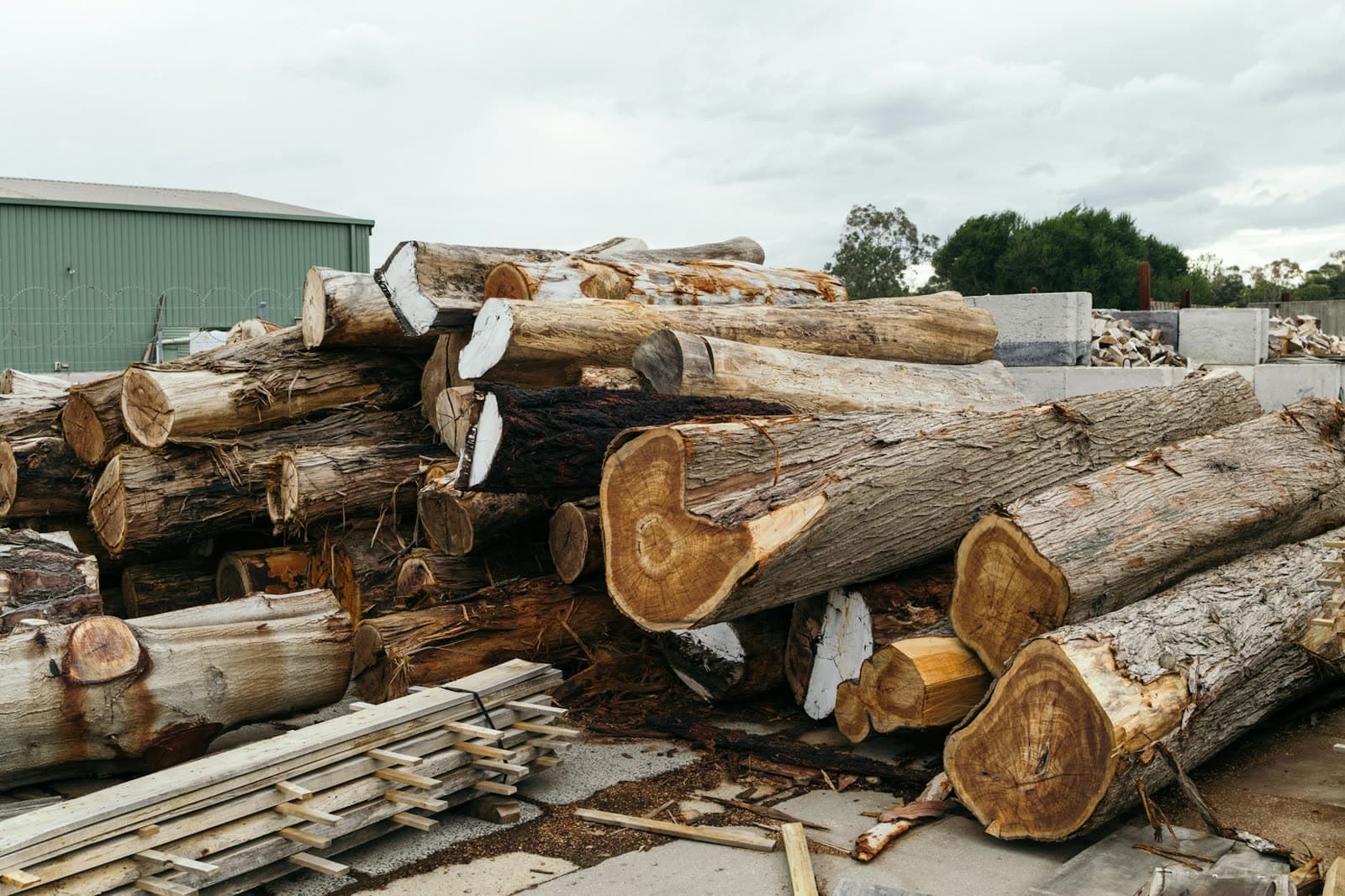
Inventory reference
Sorted log inventory yard
A clean stacked-log yard scene that supports the aggregation, storage, species separation, and buyer allocation story.
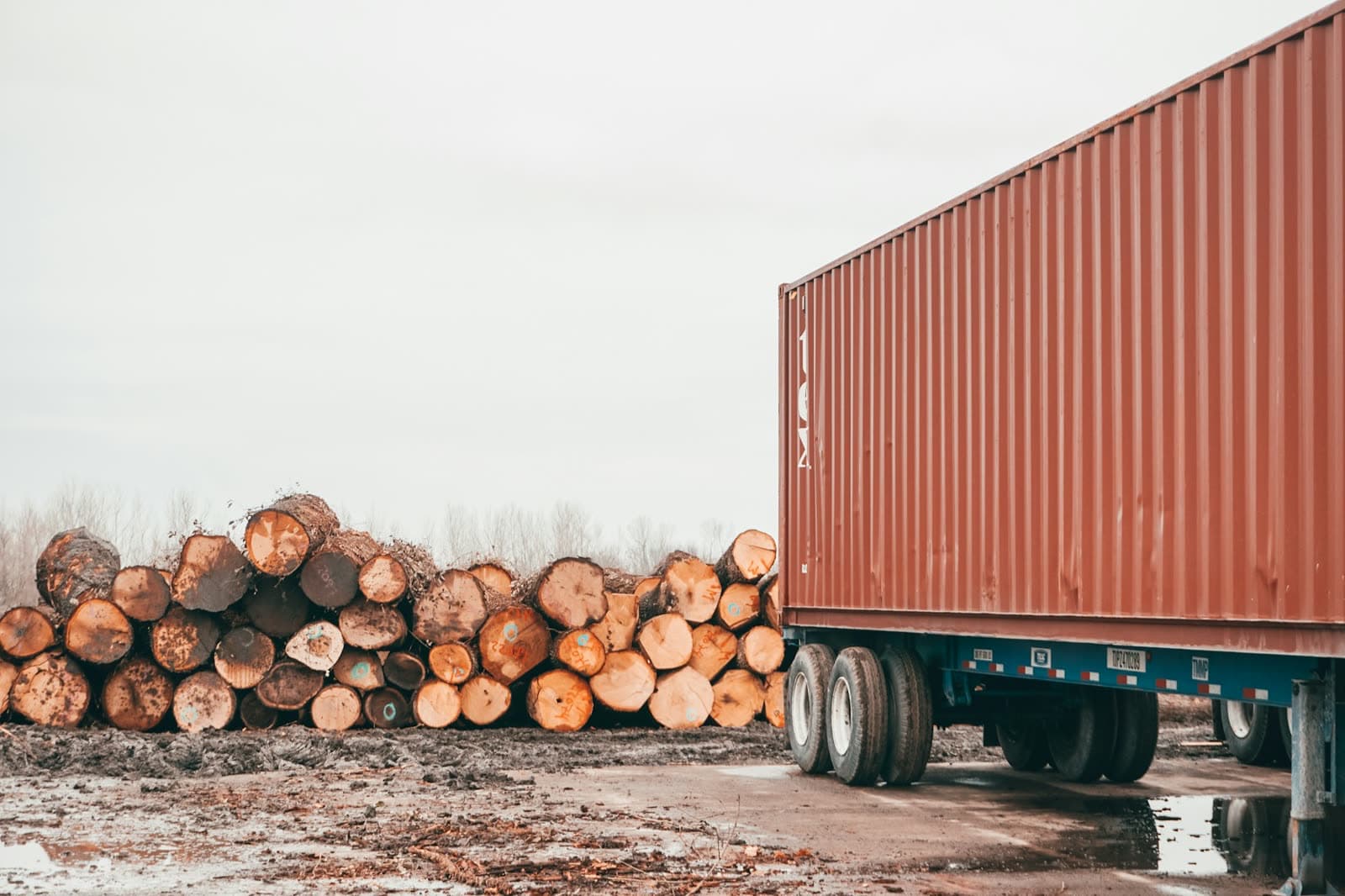
Transport reference
Loaded log transport lane
A stronger loaded-log transport scene for dispatch, route coordination, and buyer-matched movement from yard to export channel.
Throughput scenarios
Modeled annual revenue and EBITDA at 70%, 85%, and 100% of stabilized throughput.
Species price and spread
The buyer book prices species separately; the model uses a weighted average.
Available logging inventory
Buyer-ready log lanes
Inventory lanes show species recognition, monthly target volume, log form, and intended buyer use in one place.
First-yard target volume across the listed species lanes.
Inventory lanes mirror the export mix used in the financial model.
Inventory is released against buyer demand, source records, margin checks, and export-packet readiness.

Core allocation
Greenheart
Chlorocardium rodiei
200 m3/mo target
Log form
Round logs, heavy structural lots, piling candidates
Buyer use
Marine works, docks, bridges, piles, heavy structural buyers.

Premium allocation
Purpleheart
Peltogyne spp.
150 m3/mo target
Log form
Premium sorted logs and color-led specialty lots
Buyer use
Specialty lumber, flooring, decking, millwork, and high-recognition hardwood buyers.

Volume lane
Mora
Mora excelsa
250 m3/mo target
Log form
Volume hardwood logs for recurring export lots
Buyer use
Construction, flooring, heavy-use lumber, and larger blended shipment programs.

Utility lane
Soft Wallaba
Eperua falcata
200 m3/mo target
Log form
Utility logs, exterior-use lots, pole and construction candidates
Buyer use
Exterior, pole, utility, shingle, and regional infrastructure applications.

Selective lane
Wamara
Swartzia leiocalycina
100 m3/mo target
Log form
Dense premium logs released into selected buyer lots
Buyer use
Dense specialty hardwood applications where durability and appearance matter.

Diversification lane
Crabwood
Carapa spp.
100 m3/mo target
Log form
Furniture and millwork logs for diversified buyer coverage
Buyer use
Furniture, millwork, flooring, interior applications, and portfolio breadth.
Inventory release rule
The CLY keeps lots separated by producer, species, volume, photos, source file, storage position, and buyer allocation. Purchases remain documentation-gated and contract-backed so the listed inventory lanes do not become uncontrolled working-capital exposure.
Inventory Controls
| Species sorting | Lots stay separated by species and intended buyer use before release. | |
| Volume target | Monthly lane volumes are based on the first-yard 1,000 m3 model and the weighted species mix. | |
| Documentation | Source paperwork, intake photos, measurement records, custody events, and release approvals stay attached to each lot. | |
| Buyer allocation | Lots move when price floor, route economics, export packet, and buyer demand line up. | |
Sales Motion
| Find repeat buyers | Target buyers that value consolidated Guyana hardwood lots by species, grade, volume, and shipment cadence. | |
| Convert buyer demand into purchase rules | Purchase logs only when buyer demand, price floor, source file, and route economics line up. | |
| Use species sorting to lift value | Greenheart, Purpleheart, Mora, Wallaba, Wamara, and Crabwood are separated so the buyer book can price the lot correctly. | |
| Keep producers inside the network | Stalls, clear price terms, equipment access, and faster buyer matching make the yard useful to producers. | |
Operating Services
| Producer enrollment | Recruit supply into stall agreements, source files, price terms, and intake standards. | |
| Secure aggregation | Hold logs in controlled yards with lot identity, photos, storage position, and release approval. | |
| Buyer matching | Allocate lots to buyer orders by species, volume, price floor, inspection terms, and route. | |
| Export packet | Assemble shipment records, invoices, release approvals, logistics file, and GFC-facing documents. | |
| Equipment program | Lease-to-own fleet supports producer productivity without burying fleet cost in site capex. | |
| Reporting | Monthly investor reporting ties capital use, operating progress, producer pipeline, buyer pipeline, and spread. | |
Species Portfolio
Greenheart
Chlorocardium rodiei
20% mix
Buy$400
Sell$720
Spread$275
Durability-led export mix for marine, structural, and heavy-use buyers.
Purpleheart
Peltogyne spp.
15% mix
Buy$490
Sell$870
Spread$335
Premium color and density story for buyer outreach and species sorting.
Mora
Mora excelsa
25% mix
Buy$305
Sell$560
Spread$210
Volume hardwood for construction, flooring, and reliable recurring shipments.
Soft Wallaba
Eperua falcata
20% mix
Buy$230
Sell$440
Spread$165
Utility, pole, construction, and regional infrastructure applications.
Wamara
Swartzia leiocalycina
10% mix
Buy$360
Sell$650
Spread$245
Dense premium hardwood for selected buyers and higher-value sorted lots.
Crabwood
Carapa spp.
10% mix
Buy$285
Sell$520
Spread$190
Furniture, millwork, and diversified hardwood inventory for buyer breadth.
8
Execution system
Operations and Controls
The operating system is designed to make every dollar, log lot, producer file, buyer allocation, and shipment packet visible to management and investors.
Capital and Reporting Controls
| Security | Investor capital is deployed into yard readiness, fleet assets, launch compliance, and reserve accounts rather than into untracked field inventory. | |
| Capital control | Central management releases funds by milestone: site support package, contractor scope, security install, documentation system, and yard opening. | |
| Operating company | The CLY management company signs producer enrollment, stall, buyer, equipment lease, and logistics coordination agreements. | |
| Reporting | Monthly investor reporting includes cash use, site build progress, producer enrollment, buyer pipeline, inventory files, throughput, margin, and document completion. | |
Per-Yard Staffing
| Yard manager | 1 | Producer intake, inventory accountability, buyer coordination, local reporting. |
| Scale/documentation clerk | 1 | Receipts, grading intake, chain-of-custody packets, shipment records. |
| Yard hands / equipment spotters | 2-3 | Handling coordination, storage discipline, loading support, equipment oversight. |
| Security / gate control | Local coverage | Gate control and overnight storage protection; staffed or contracted based on the final site. |
Monthly yard overhead
Target fixed operating cost: $15,000/mo per CLY.
Monthly Yard Cost Detail
| Yard manager/local lead | $1,600/mo | Producer intake, yard accountability, daily reporting, and local issue resolution. |
| Documentation clerk | $900/mo | Receipts, lot files, chain-of-custody packets, and shipment records. |
| 2-3 yard hands/equipment spotters | $2,400/mo | Handling coordination, storage discipline, loading support, and equipment oversight. |
| Security and gate coverage | $3,200/mo | Local gate control and overnight protection; can be staffed or contracted. |
| Fuel and minor maintenance | $2,000/mo | Support for yard movement, light equipment upkeep, and small repairs outside per-m3 export logistics. |
| Insurance, permits, safety supplies | $1,000/mo | Site-level insurance, local compliance items, PPE, and safety consumables. |
| Office, communications, supplies | $600/mo | Connectivity, records, forms, office supplies, and basic admin. |
| Operating reserve | $3,300/mo | Monthly site reserve for operating cadence, small repairs, and launch-stage working float. |
| Target per yard | $15,000/mo | Monthly operating cost for a non-processing yard with staffing and gate coverage. |
Control Stack
Gate control
Each yard runs controlled entry, truck log, visitor log, producer identity check, and release approval before any lot leaves the yard.
Lot identity
Every received log lot receives a yard ID tied to producer, species, volume, source documents, photos, storage position, and buyer allocation status.
Physical security
Fencing, lighting, cameras, security coverage, and defined loading lanes protect stored inventory and buyer confidence.
Document discipline
Receipts, source records, measurement records, chain-of-custody packets, export files, and buyer shipment packets are held centrally and by site.
Contract matching
Purchases are approved against buyer demand, target species, price floor, expected logistics cost, and export documentation readiness.
Daily reconciliation
Lot records, shipment packets, buyer allocation, producer files, and release approvals are reconciled daily across site and central records.
Custody Workflow
| Stage | Control | Records |
|---|---|---|
| Producer enrollment | Verify producer identity, licensing position, concession/source relationship, contact details, payment instructions, and stall agreement. | Producer file, license/source evidence, signed enrollment, stall terms, tax/payment details. |
| Log intake | Record species, lot volume, truck details, delivery date, source paperwork, photos, and yard location at intake. | Intake receipt, measurement record, photos, truck/gate log, source document copy. |
| Storage and custody | Maintain separation by lot, producer, species, and buyer allocation so inventory cannot be mixed without a recorded transfer. | Yard map, lot ledger, custody event log, security log, stock count. |
| Buyer allocation | Match lots to approved buyer orders or export demand with price, species, volume, logistics, and documentation requirements complete. | Buyer order, sales contract or LOI, price file, allocation memo, margin check. |
| Export packet | Assemble the shipment packet with GFC-facing records, invoices, payment proof, logistics files, and release approvals before dispatch. | Shipment packet, export documents, invoices, payment proof, logistics file, compliance record. |
9
Support file
Sources and Appendix
Source support is kept at the bottom so the investor reads the business first and can verify the reference file afterward.
Business-plan structureSBA traditional plan guidance supports the executive, company, market, management, product, sales, funding, and financial sections used in this dossier.Forestry authorityThe Guyana Forestry Commission is the primary public source for forestry publications, application forms, VPA/FLEGT, PEFC, REDD+/MRVS, policies, and notices.Log export policy referenceGFC's Revised National Log Export Policy, 3rd Phase 2020-2025, is used as an official posted reference for log-export modalities and levy concepts.Market reportsGFC market/information reports support price, production, and market context.VPA/FLEGT contextGuyana-EU VPA materials support the legality-assurance and good-governance context for export-facing forestry operations.Chain-of-custody referenceGFC-hosted PEFC chain-of-custody materials support the planned custody, lot-control, and documentation discipline used by the yard model.
Model Notes
- Pricing inputs are documented by species and roll into the weighted network average used in the forecast.
- Export growth is presented as incremental formal export capacity from underutilized forestry allowance.
- Logistics model uses port-side handling and river/barge movement; ocean freight is handled through FOB buyer terms.
- The company handles contract-backed buying, secure storage, aggregation, documentation coordination, logistics, and export sales.
- Government land/utilities are built into the base case, keeping funded capex focused on yard readiness and controls.
- The $13.1M stabilized EBITDA line uses the $15K/month/site opex case, $45/m3 port-side logistics, a variable purchase spread, and a $750K central compliance/export desk.
Primary Sources
Guyana Forestry CommissionPrimary official public source for forestry publications, policies, notices, forms, VPA/FLEGT, PEFC, and MRVS materials.GFC Revised National Log Export Policy 2020-2025Official posted policy reference for log export modalities and levy concepts.GFC Market/Information ReportsOfficial source family for market and sector updates.Guyana-EU Voluntary Partnership Agreement Main TextLegality-assurance and forest-governance context for export-facing operations.GFC-hosted PEFC Chain of Custody StandardChain-of-custody reference for inventory identity, records, and custody-control planning.CIA World Factbook Guyana mapPublic-domain country map used for the hero map panel.U.S. Small Business Administration business plan guideTraditional plan structure and funding/projection guidance.Archived Guyana Forestry Commission 21 Species BookletGuyana species, export availability, grading, and river-transport context.Guyana waterway and port contextWaterway, seaport, and harbor context for the Guyana logistics model.Demerara River navigation contextGeorgetown port and Demerara River navigation context.Woodworkers Source Purple Heart lumberPremium hardwood market reference.The Wood Database: PurpleheartSpecies context and market-position reference.The Wood Database: JatobaComparable dense Latin American hardwood context.
What is the core business?
The base case is a non-processing export-yard network. The CLY buys, secures, documents, aggregates, and ships logs.
How is inventory quality controlled?
Purchasing is contract-backed and documentation-gated. Lots are stored in producer stalls, then settled through source records, buyer demand, price floor, and export-readiness checks.
What does the first tranche produce?
The first tranche capitalizes the established vehicle company and funds execution files: site support, producer files, buyer LOI pipeline, GFC-facing export files, insurance pricing, contractor scopes, inventory logs, and chain-of-custody records.
Why include the 2020-2025 log export policy?
It is an official GFC-posted policy reference for log-export modalities and levy structure.
Where does upside come from?
Base Year 3 economics come from 60,000 m3/year throughput. Years 4-5 upside comes from buyer mix, species sorting, better lot presentation, and fewer coordination failures while volume stays inside modeled legal throughput.